
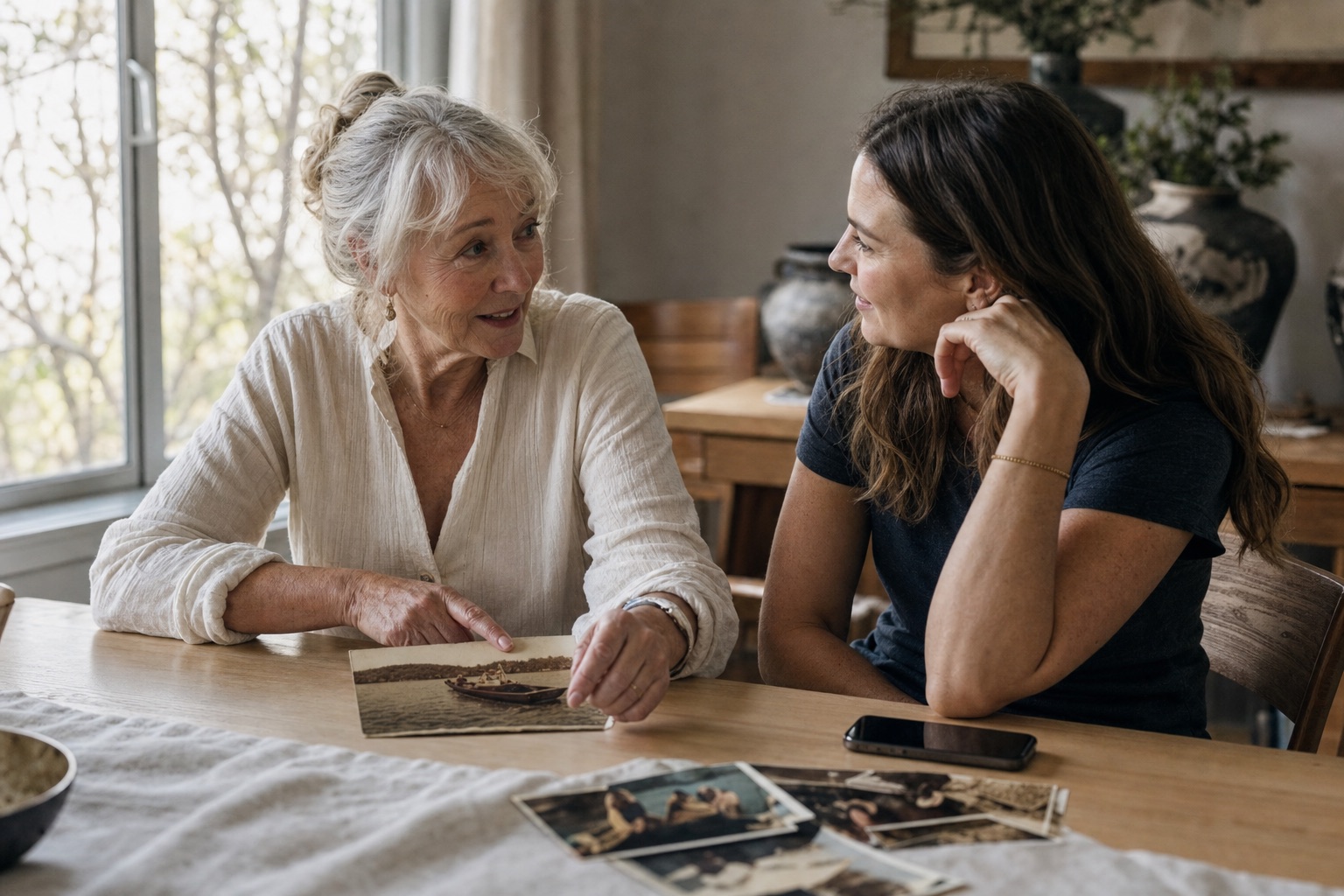
Every family has stories: the funny ones repeated at holidays, childhood adventures that grow a little each year, lessons learned over decades, and expressions only one person uses.
These moments often become more precious with time. Unfortunately, many people do not think about preserving them until they realize how quickly details can disappear.
It does not take expensive equipment or a recording studio to begin preserving someone’s voice and experiences. Sometimes it starts with a simple conversation.
Why voices matter
Photographs capture appearance. Letters preserve handwriting. Videos hold a moment in time. A voice carries something different: emotion, humor, personality, and the familiar way someone says your name.
Hearing a loved one’s voice years later can bring back memory in a way no photograph can. That is why more people are preserving voices alongside photographs and written stories.
Start before you think you need to
Memory preservation is not only something to do near the end of life. The best time to begin is often much earlier.
Stories told over coffee, conversations after dinner, and childhood memories shared on an ordinary afternoon may become the moments people value most. Waiting for a perfect time can mean missing opportunities that do not return.
You do not need perfect questions
There is no right or wrong way to preserve someone’s story. Simple questions often lead to the best conversations, and one question can become an hour of memories.
- What was your childhood home like?
- Who influenced you most while you were growing up?
- What lesson do you hope future generations remember?
- Which family traditions meant the most to you?
- What are some of your happiest memories?
- What might people be surprised to learn about you?
Everyday moments matter too
Not every memory needs to be life-changing. Favorite recipes, old pets, vacations that went wrong, and songs that bring back a particular moment all help tell the full story of a life.
The ordinary details are often the details people miss most.
Technology can help preserve stories naturally
Preserving history once meant a formal interview and a dedicated recorder. Today, voice recordings, photographs, videos, written memories, and natural conversations can all become part of a family history.
The goal is not a perfect autobiography. It is capturing the personality behind the stories.
How Kulohi helps preserve memories
Kulohi approaches memory preservation through everyday conversation. Robin may invite a story about a vacation, tradition, recipe, or lesson learned over the years.
Members choose whether something becomes a Life Stories draft and whether it is ever shared. Kulohi is not designed to record every moment or automatically turn every conversation into a family artifact.
Sometimes the conversations that feel ordinary today become the ones future generations treasure most.
Frequently asked questions
Questions people often ask.
When should I start preserving family memories?
As early as possible. There does not need to be a special occasion. Many meaningful stories arrive during ordinary conversations.
Do I need professional recording equipment?
No. A smartphone, tablet, or computer is enough to begin. Capturing the person’s voice and story matters more than perfect audio quality.
What kinds of memories should I save?
Anything meaningful: traditions, life lessons, funny stories, favorite recipes, travel memories, or advice for future generations.
What if my parent says their stories are not interesting?
That is common. People often do not realize how meaningful their everyday experiences are until someone asks. One simple question can be enough.
Does Kulohi automatically save every conversation?
No. Members remain in control of the stories and memories they choose to preserve or share.
Final thoughts
What matters most.
One day, stories stop being told, not because they were unimportant, but because time quietly moved forward.
Preserving memories is not only about the past. It is a gift to the future: a familiar laugh, a lesson in someone’s own words, or a story the next generation never knew.
The greatest family treasures are not always found in albums or heirlooms. Sometimes they begin with the words, “Let me tell you about the time...”