
ThursdayCathy visiting
Around noon
AI COMPANIONSHIP FOR OLDER ADULTS & FAMILIES
Kulohi is a place where you can talk with Robin, enjoy your day, and stay connected with the people who matter. Robin is an AI companion designed with older adults in mind.
No payment is collected when you request access. We’re welcoming people in small groups.
Our founder’s story
THE VOICE BEHIND KULOHI
A familiar voice that gets to know you.
Talk about your day, pick up a story where you left off, or ask for help remembering something. Over time, conversations can build on one another, making each visit feel more personal.
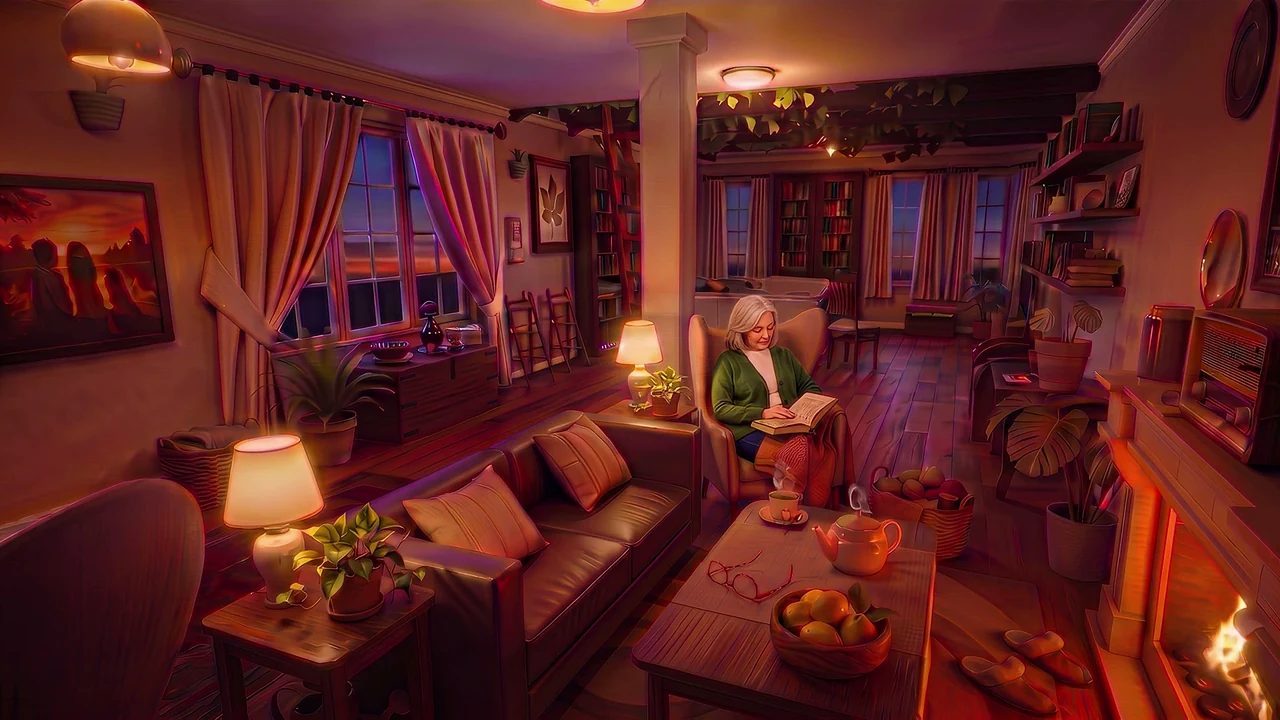
Robin's home is the Cottage, a familiar place to return whenever you're ready to talk or type.
Morning, Mae. You were thinking about calling your sister this week. Would today be a good day?
Pattern Awareness brings your own conversational rhythms into that continuing relationship.
Early Access is opening in small groups. No payment is collected when you request access. No dedicated Kulohi hardware is required.
Pattern Awareness · Rolling out slowly
Over weeks and months of ordinary conversation, there is room for your words, your stories, your rhythms, and the little imperfections that have always been yours.
A history of what normal sounds like for you.
The point is not surveillance.It is attention.
With your choice to turn learning on, Pattern Awareness builds a personal baseline from your conversations and activity in Kulohi. That includes how quickly you speak, how you pause, how much you say, and when you usually return to talk.
Pattern Awareness compares those patterns over time, alongside things such as completing reminders. Sustained changes across several patterns deserve a closer look, with your own history as the starting point.
Everyone has off days. One forgotten word, a tired afternoon, a missed reminder, or an unfinished sentence does not define a problem. Your accent, disability, speech differences, and ordinary imperfections are part of your own starting point.
Not diagnose it. Not frighten you. Notice it. A change does not tell Robin its cause or medical meaning. She can miss or misunderstand changes; she is not medical care or emergency monitoring.
Robin doesn't ask, “Is this normal for someone your age?”
She asks, “Is this normal for you?”
Familiarity becomes a conversation
Your usual rhythms take shape through ordinary use, with Pattern Awareness turned on.
Compare recent patterns with your own history, looking for sustained changes together.
A check-in is a question about how you have been feeling, without deciding what a change means.
Talk about what you have noticed and what you would like to do next. You remain at the center.
You can choose to tell someone you trust.Automatic contact updates · In development
“There have been more pauses in our conversations lately. How have you been feeling?”
Your answer matters. There is room for an everyday explanation, with your context alongside the change.
Sometimes, changes in how we communicate can be subtle. Longer pauses, difficulty finding familiar words, repeating thoughts, or losing track of a sentence may become noticeable over time.
Robin's Pattern Awareness is being built to recognize more of these changes by learning how someone normally communicates — rather than comparing them to everyone else.
The foundation is already in place. Kulohi measures conversational patterns such as speaking pace, pauses, conversation length, timing, and activity. We're building on that foundation to recognize more nuanced changes in speech and language, introducing new capabilities only when they're ready.
Pattern Awareness is designed to notice meaningful differences, not diagnose medical conditions or determine their causes. Expanded word-finding and language-change recognition is not available today.

LIFE DOESN'T STOP FOR TECHNOLOGY
Mae has a garden to tend, people to call, and stories worth remembering. Robin isn't there to replace any of it. She's there when Mae wants to talk, needs a reminder, or has a memory she'd like to save.
Some days, that's a long conversation. Other days, just a few minutes. Either way, the connection is there when she returns.
Contemporary scenes on this page are illustrative and show fictional people and relationships. They are not customer photographs or testimonials.
Later that morning
Mae can talk the way she always has: the visit she is looking forward to, the photograph she wants to find, the little thing she needs to do the night before. Robin can help keep the details and their meaning together.
Talk normally
Cathy's coming Thursday around noon. I told her I'd find that old picture of her dad from the lake. Remind me to get it ready that morning, and to take the chicken out of the freezer Wednesday night.
Cathy's coming around noon Thursday, and you want her dad's lake photograph ready for her. What time Thursday morning would you like the reminder, and what time Wednesday night for the chicken?
Around noon
Ready for Cathy's visit
Robin asks for a time before saving the reminder.
Context Robin keeps: the photograph is of Cathy's dad at the lake. Mae wants to have it ready when Cathy visits.
Fictional product example. The cards show the details to organize, not completed actions. Robin confirms saved reminders; check important dates and details.

Then Sam sends a moment
A private space for the family and friends you invite. Share photographs, short videos, voice messages, and replies. We call it Kindred. Mae can open Sam's video when she wants, even if she was busy when he sent it.
“Grandma!! I finally got one!”
Your private circle: Robin conversations stay separate. Mae decides what, if anything, she shares.
See how you stay connectedMemories in your own words
A story can surface naturally while someone is talking with Robin. When it does, Robin can help shape the member's own words into a draft. The member decides whether it becomes a Life Story, a memory saved privately for her to return to.
A conversation with RobinMae is remembering the old lake picnic.
“The wind took the napkins first. Your grandfather chased them halfway down the beach.”

Mae can review, change, or leave it unsaved.
PRIVATE BY DEFAULT
The things you share with Robin are personal. Your conversations and saved stories stay private, even when you invite family or friends to connect through Kulohi.
You decide what to share, whether that's a photo, a voice message, or a moment from your day. Inviting someone into your circle never gives them automatic access to your private conversations.
Kulohi keeps conversation history so Robin can pick up the thread and get to know you.
For someone you love. One day, maybe for you.
Kulohi works in a compatible browser on a phone, tablet, or computer. No special device required. Internet access is needed; talking with Robin needs a microphone and speaker, and you can type instead.
Native iPhone and iPad apps are in development, with Android planned next. Live calling, sharing saved stories with loved ones, and optional SMS or push updates are also still in development.
Request access for yourself or someone you love. We will write when an Early Access invitation is ready. No payment is collected today.